

BARR Spotlight: How Indian Township School is Honoring Culture, Building Relationships, and Driving Student Success
On the Passamaquoddy Indian Township Reservation in Princeton, Indian Township School is embracing a powerful model for student success that honors culture, strengthens relationships, and supports the whole child.
Serving approximately 115 students in pre-K through grade 8, Indian Township School began implementing the BARR (Building Assets, Reducing Risks) model in May 2024. BARR is a research-backed approach focused on strengthening relationships, improving academic outcomes, and reducing high-risk student behaviors. The Maine Department of Education (DOE) began funding BARR implementation in 2023, investing $18 million in federal funds to support schools recovering from the impact of the pandemic on academics, student well-being, student engagement, and school climate. Since then, more than 100 Maine schools have implemented, or are in the process of implementing, BARR.
Through a grant from the Maine DOE’s second round of BARR funding, Indian Township School began using the BARR model with grades 4-6 during the 2024-2025 school year. That work has since expanded to include grades 7 and 8, with plans underway to bring elements of BARR into pre-K through grade 3, too.
At the heart of BARR at Indian Township School is a deep alignment between the model’s focus on relationships and the Passamaquoddy community’s cultural values.
“BARR seems to be a natural fit for us and our culture,” Principal Dolly Barnes said. “As a community, we take care of our members. When something is going wrong, we all step in and try to help. The BARR approach is about relationships, and as Passamaquoddy people, that’s who we are. We are in a relationship with our community and our environment.”
Barnes noted that while these values have always been present at Indian Township School, BARR has provided a meaningful framework and structure to bring them into sharper focus.
A cornerstone of the BARR model at Indian Township School is “I-Time” (also known as “U-Time” in grades K-5), a dedicated weekly block of class time when students and staff participate in an activity designed specifically to help them build relationships, develop social-emotional skills, and strengthen their sense of community.
In one classroom session this past school year, students played a charades game focused on identifying emotions. As one student acted out a feeling, others worked together to interpret it. This was followed by a thoughtful discussion about how emotions are expressed—and how they can sometimes be misunderstood.
These activities are designed to help students better understand themselves and their peers, creating a safe and supportive environment for learning.
In educator Michaelene Spencer’s classroom, that sense of care extends even further. Her students help care for three class guinea pigs—Callie, Nalla, and Tillie—learning responsibility, empathy, and compassion through daily interactions.
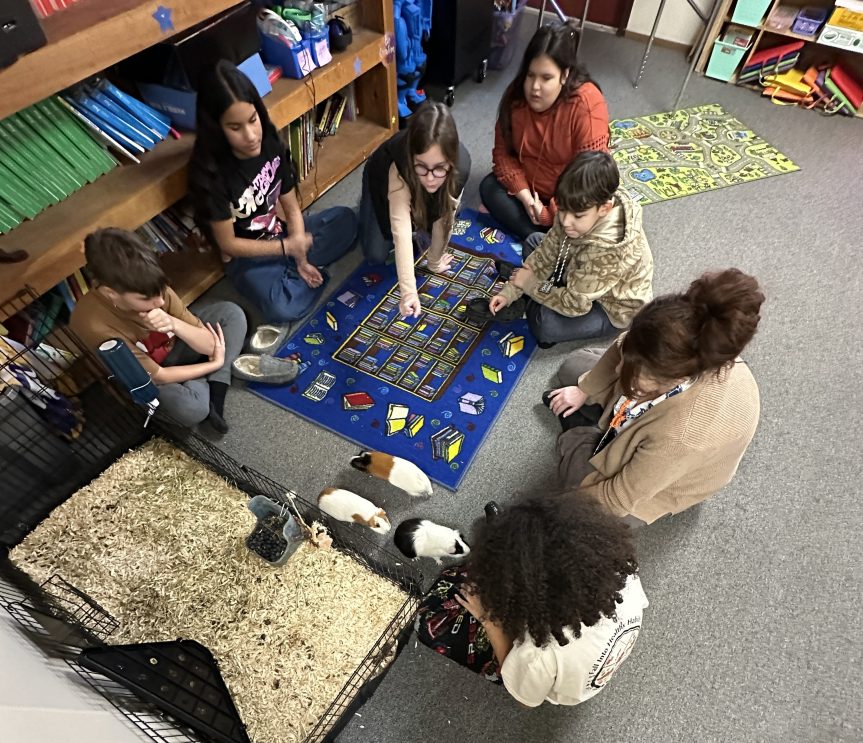
Reflecting on Indian Township School’s experience with BARR, Spencer emphasized its role in supporting the whole child.
“I find that many of the basic needs that are often missing for children are addressed,” Spencer said.
In addition to I-Time/U-Time, educators at Indian Township School participate in weekly BARR “Block” meetings, where teachers and administrators come together to discuss each student’s progress, strengths, and needs. These meetings, held in different grade-level pods, allow staff who work most closely with the students in each pod to coordinate support, plan interventions, and celebrate successes. Teachers for grades 7 and 8 are in one pod, and 4th-, 5th-, and 6th-grade teachers are in another pod.
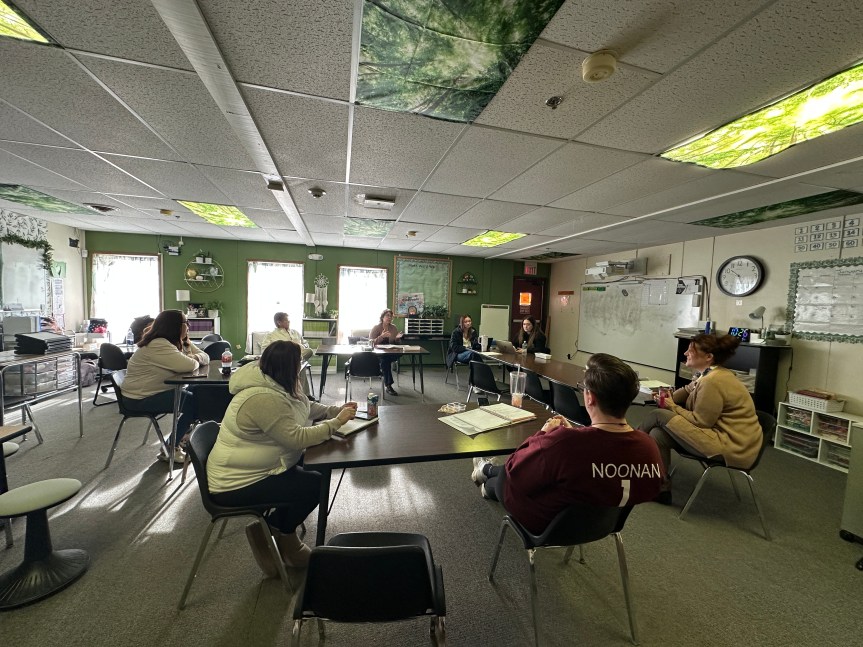
BARR was initially implemented at Indian Township School because of its relationship-building strategies. The school’s administration wanted to help non-native staff better understand the situations and struggles of the native student population.
“A surprise was how those relationships were forged between the staff—and how that has made them a more cohesive team,” Barnes said.
Block meetings also align closely with Indian Township School’s Positive Behavioral Interventions and Supports (PBIS) framework, reinforcing positive behavior and creating consistent expectations across the school.
“What we see every day is students smiling and their needs being met,” Emma Soctomah, PBIS and BARR Coordinator, said. “We see strong relationships, good conversations, and real connection between students and teachers. BARR makes sure we’re focusing not just on academics but on the whole child.”
BARR has created a system within Indian Township School that helps ensure students are ready to learn. The support it provides has contributed to significant academic growth at the school. Since implementing the BARR model, the school has documented improved attendance, fewer behavioral issues, and rising academic achievement—results that stand among the most notable multi-year gains for a tribally controlled school.
Attendance has shown a dramatic turnaround. Drawing on the Maine DOE Chronic Absenteeism Detail Extract, Indian Township School reduced chronic absenteeism to 27 percent in the 2024-2025 school year—down from an estimated peak of 58-68 percent just three years earlier. Nearly three-quarters of students now meet the attendance goal, and the school’s progress has helped drive Maine Indian Education’s systemwide chronic absenteeism rate down to 19.6 percent, an improvement of roughly 37 percentage points from the 2021-2022 peak.
Academic achievement has also climbed:
- 63.6% of eighth graders are meeting state reading expectations, which means nearly two-thirds of students are prepared for high school success, with the strongest reading performance district-wide.
- 61.5% of fifth graders are meeting or exceeding reading standards, including one student who is achieving “Above State Expectations.”
- Half of seventh graders are meeting state reading standards, demonstrating strong academic momentum.
- Grade 8 science scores improved by 5.48 points over three years (from 28.33 to 33.82), with students performing at or near proficiency rising from 20% to 36% and students in the “Well Below” category dropping from 80% to 36%.
- Grade 5 science scores improved by 2.16 points, with the school’s first students reaching proficiency level.
“These achievements represent more than test scores; they reflect growing confidence, critical thinking skills, and a school culture where every student knows they can succeed,” Dr. Reza Namin, Superintendent of Maine Indian Education, said.
Principal Barnes credits this success with a shared commitment among Indian Township School staff.
“Our teachers have embraced innovation and worked together to share best practices,” she said. “We’ve implemented research-based strategies like the BARR model while maintaining our commitment to culturally responsive education.”
For Indian Township School, success is measured not only in academic gains but in the strength of its community and the pride its students carry.
“I think focusing on students as whole children is really preparing them for the future,” Soctomah said. “We also make sure to include our culture every day—whether it’s speaking our language or helping students feel proud of who they are and where they come from.”
That sense of pride is especially meaningful for students who now see themselves reflected in Indian Township School leadership.
“We have Native leadership here—our principal, vice principal, coordinators—we are community members,” Barnes said. “Our students can look at us and see that this could be them someday. That creates a strong sense of pride in being Passamaquoddy.”
As Indian Township School continues to grow its BARR implementation, its story stands as a powerful example of what’s possible when schools center relationships, honor culture, and work together to support every student. Through BARR, Indian Township isn’t just improving outcomes; it’s strengthening a community and building a future grounded in connection, care, and opportunity.
This story is part of a series highlighting positive outcomes from Maine schools implementing the Building Assets, Reducing Risks (BARR) model—a research-backed school improvement framework that strengthens relationships, uses real-time student data, and builds intentional systems to support academic achievement, engagement, and student well-being for all learners. BARR aligns with the Maine Department of Education’s (DOE) whole-student approach, which emphasizes that all students should be healthy, safe, engaged, supported, challenged, and prepared.
Through $18 million in federal emergency relief funds, 120 schools across 50 school administrative units in Maine have implemented—or are in the process of implementing—BARR strategies. These efforts have strengthened educator collaboration, reduced student behavioral issues, and improved student attendance and academic outcomes.
To submit a good news story to the Maine DOE, please fill out the good news submission form.
Related
Legal Disclaimer:
EIN Presswire provides this news content "as is" without warranty of any kind. We do not accept any responsibility or liability for the accuracy, content, images, videos, licenses, completeness, legality, or reliability of the information contained in this article. If you have any complaints or copyright issues related to this article, kindly contact the author above.
