

RSU 14’s Katahdin Program Supports Student Success Through Experiential and Relationship-Based Learning
Katahdin Program students boil sap they collected.
Located within Windham High School, RSU 14’s Katahdin Program provides students from Windham and Raymond with an alternative learning environment centered on hands-on instruction, outdoor learning, community partnerships, and strong relationships with staff. Through individualized support and experiential learning opportunities, the program helps students reconnect with school, complete graduation requirements, and build pathways toward future success.
“Alternative education deserves recognition,” Katahdin Program Director Rich Meserve said. “Education has to be different for some students. Relationships, trust, and flexibility are often what help students reconnect.”
Meserve started working in alternative education unexpectedly after a career in the business world. While living in Massachusetts, he began tutoring students who were struggling in traditional school settings and quickly found himself drawn to the work. He accepted a position in an alternative education program and later returned to school to pursue teaching professionally.
Originally from Maine, Meserve moved back to the state in 2004 to work at the REAL School before helping to launch the Katahdin Program in 2016. Many of the staff members who helped build the REAL School program transitioned to the Katahdin Program, bringing more than 120 years of combined experience in alternative and experiential education.
“That consistency matters,” Meserve said. “Students and families get to know the people here, and those relationships build over time.”
A School Within a School
The Katahdin Program operates as a “school within a school” at Windham High School, with its own entrance and dedicated learning spaces designed to create a smaller, more personalized environment. Approximately 23 students in grades 9-12 attend the program each year.
Many students come to the Katahdin Program after experiencing challenges in traditional school settings, including lack of attendance, anxiety, academic disengagement, or struggles finding a sense of belonging in larger school environments. The Katahdin Program is intentionally structured to provide individualized support while helping students rebuild confidence and connection to school.
Katahdin Program students attend a five-hour school day from 8:40 a.m. to 1:40 p.m. and are transported by district vans, with transportation staff viewed as an important part of the overall support system. They are often the first and last people students interact with each day. The daily structure emphasizes consistency, communication, and community. Students and staff eat lunch together each day, using that time to strengthen relationships and practice communication and social skills.
“We really focus on the soft skills and relationship-building,” Meserve said. “The more we get to know our students, their situations, and their needs, the more successful they become.”
Academics Connected to Real-World Learning
Students complete graduation requirements and earn credits aligned with district and state standards while participating in interdisciplinary and experiential learning opportunities. Academic instruction emphasizes STEM (science, technology, engineering, and mathematics) and humanities while integrating outdoor education, practical skills, and community engagement.
Students often work in multi-grade classrooms with individualized supports tailored to their learning goals and academic needs.
“We try to make experiences part of the academics,” Meserve explained. “Whether it’s going to the Museum of Fine Arts in Boston as part of a humanities unit on Ancient Egypt or interviewing veterans for the Library of Congress, those experiences are directly tied to learning.”
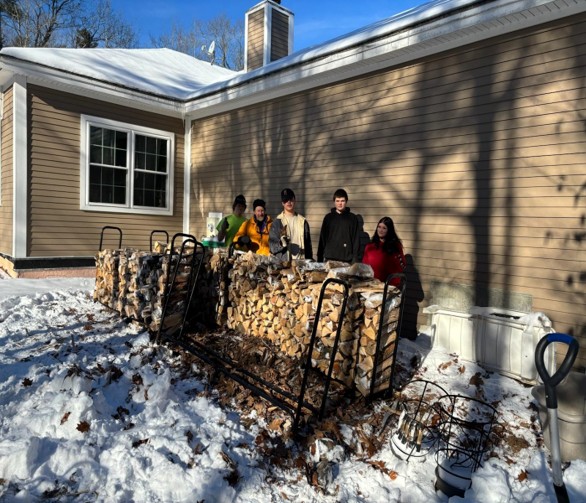
Project-based and community-based learning opportunities are embedded throughout the program. Students regularly participate in service projects across the region, including volunteering with local schools and food pantries, supporting older community members by stacking wood and delivering sand buckets in the winter, and partnering with organizations on environmental and outdoor stewardship projects.
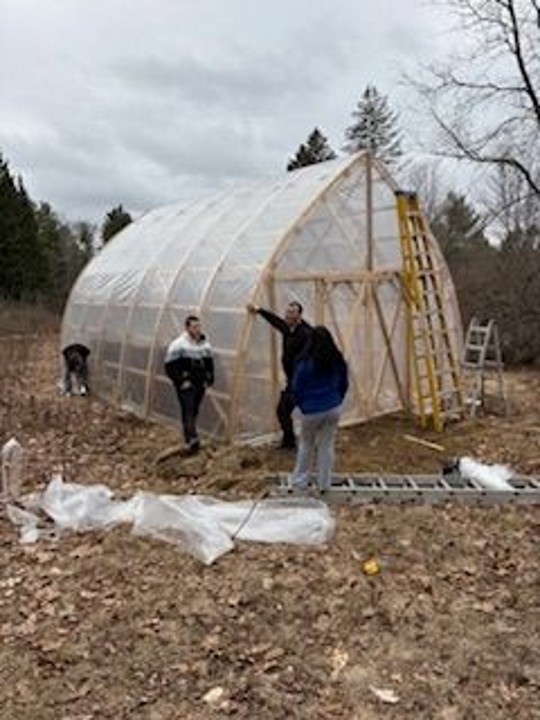
The program also emphasizes practical and career-connected learning. Students have built picnic tables, birdhouses, trail infrastructure, and outdoor structures while developing teamwork, communication, and problem-solving skills.
Staff expertise helps expand these opportunities. Team members bring experience and certifications in wilderness first response, outdoor leadership, climbing, paddling, skiing, backpacking, and adventure-based counseling. Students participate in activities ranging from indoor and ice climbing to trail maintenance and outdoor leadership experiences.
“In the grand scheme of things, those experiences are just as important as what happens in the classroom,” Meserve said. “We want students learning through experiences as much as possible.”

Prioritizing Social-Emotional Support
The Katahdin Program places a strong emphasis on social-emotional support and restorative practices. The staffing team includes regular and special education teachers, counselors, educational support staff, a social work intern, and an administrator who work collaboratively to support students as whole individuals.
Counselors are embedded within the program and available throughout the day to support students with challenges both inside and outside of school. Staff maintain regular communication with families and work to build trust and partnership with caregivers.
“Many students and families come to us after difficult experiences in school,” Meserve said. “We work hard to build trust and create a true partnership with families.”
The program uses restorative practices as its primary approach to conflict resolution and accountability. Rather than focusing primarily on punishment, staff work with students to repair harm, reflect on situations, and rebuild relationships when challenges arise.
“Growth is a big piece of what we do here,” Meserve said. “Restoring harm and helping students move forward is important.”
Community Partnerships Strengthen Opportunities
Community partnerships have played a major role in expanding opportunities for students while helping reduce barriers to participation. Meserve credits years of relationship-building, grant writing, and community support for helping sustain many of the program’s experiential learning opportunities.
Students participate in partnerships and projects with local organizations, outdoor programs, food pantries, and community groups throughout the region. The program also relies on community donations, fundraising, and partnerships to expand access to outdoor equipment and learning experiences.
“We’ve been fortunate to have incredible support from our district, school board, and community,” Meserve said. “That support allows us to provide opportunities students may not otherwise have.”
Supporting Student Success Beyond Graduation
Meserve said attendance, engagement, and confidence often improve significantly after students join the program, with most graduates moving on to employment, college, military service, or other postsecondary pathways.
This year, the program will celebrate seven graduates, all of whom are currently employed, with several also pursuing college opportunities.
For Meserve, the success of the Katahdin Program reflects a broader commitment within RSU 14 to support students through flexible and innovative approaches to learning.
“I’m continually amazed by the foresight and commitment of district leadership and the school board,” Meserve said. “This program exists because people believe all students deserve opportunities to succeed.”
As schools across Maine continue to explore ways to support students with diverse strengths and needs, programs like the Katahdin Program demonstrate the important role alternative education can play in helping students build confidence, develop meaningful connections, and experience success in school and beyond.
This story was written in collaboration with Windham High School (RSU 14) as part of an ongoing series to highlight alternative education programs across Maine. For more information about alternative education, please visit the Maine DOE Alternative Education webpage. To submit a good news story to the Maine DOE, please fill out the good news submission form.
Related
Legal Disclaimer:
EIN Presswire provides this news content "as is" without warranty of any kind. We do not accept any responsibility or liability for the accuracy, content, images, videos, licenses, completeness, legality, or reliability of the information contained in this article. If you have any complaints or copyright issues related to this article, kindly contact the author above.
